
There’s something truly comforting about this **Oven-Baked Salmon with Honey Soy Glaze Recipe**—it’s sweet, savory, and oh-so-simple to pull off. Whenever I make it, my kitchen fills with that irresistible glaze aroma that promises a delicious dinner ahead. Trust me, it's totally worth making any night of the week.

Jump to:
- Why You'll Love This Recipe
- Ingredients & Why They Work
- Make It Your Way
- Step-by-Step: How I Make Oven-Baked Salmon with Honey Soy Glaze Recipe
- Top Tip
- How to Serve Oven-Baked Salmon with Honey Soy Glaze Recipe
- Make Ahead and Storage
- Frequently Asked Questions:
- Final Thoughts
- Oven-Baked Salmon with Honey Soy Glaze Recipe
Why You'll Love This Recipe
I get so excited sharing this Oven-Baked Salmon with Honey Soy Glaze Recipe because it’s one of those dishes that feels fancy yet takes just minutes to make. Plus, the balance of sweet honey and salty soy glaze is absolutely addictive!
- Effortless yet impressive: You can whip this up on a busy weeknight but it tastes like you spent hours on it.
- Perfectly balanced flavors: The honey and soy sauce combine for a glaze that’s sweet, salty, and savory all at once.
- Juicy, flaky salmon every time: Baking it gently keeps the fish tender and moist without drying it out.
- Simple ingredients, big impact: Pantry staples come together to create a gourmet-style salmon that's great for any occasion.
Ingredients & Why They Work
This recipe is a beautiful little symphony of flavors. Each ingredient plays a key role—from the umami boost of soy sauce to the sticky sweetness of honey and the zing of Dijon mustard. Here’s why I choose these:

- Salmon fillets: The star of the show—I always go for skin-on fillets because the skin crisps up nicely and keeps the fish moist.
- Low sodium soy sauce: This lets you control the salt level so the glaze isn’t overpowering.
- Olive oil: Adds smoothness and helps the glaze stick to the salmon.
- Honey: Provides a naturally sweet balance and caramelizes beautifully while baking.
- Dijon mustard: Brings a subtle tang that brightens the glaze.
- Garlic: Minced fresh garlic adds a punch of savory depth, making the glaze more complex.
Make It Your Way
I love switching things up depending on my mood or what’s in the pantry. This recipe is a great base, and you can make it your own with just a few tweaks.
- Variation: Sometimes, I swap out the honey and soy for a maple glaze if I want a richer sweetness—it’s amazing! You can also add a sprinkle of chili flakes if you want a little heat.
Step-by-Step: How I Make Oven-Baked Salmon with Honey Soy Glaze Recipe

Step 1: Let the Salmon Come to Room Temp
I always take the salmon out of the fridge about 15-20 minutes before cooking. This helps it bake more evenly and prevents the center from being cold while the outside cooks. Just leave it on the counter while you prep your glaze.
Step 2: Whisk the Honey Soy Glaze
In a small bowl, whisk together the soy sauce, olive oil, honey, Dijon mustard, and the minced garlic. Don’t rush this—it’s the flavor powerhouse of the dish. You want a nice smooth glaze that will coat the salmon evenly.
Step 3: Prep and Bake the Salmon
Line your baking dish with parchment or foil for easy cleanup, then place the salmon fillets skin side down. Brush half of the glaze over the top—make sure you don’t skip this part, it seals in the flavor and moisture. Pop it in a 400° F (200° C) oven for 12 minutes.
Step 4: Add More Glaze and Finish Baking
After 12 minutes, pull the salmon out and brush on the remaining glaze. Then bake for another 2 to 8 minutes, depending on the thickness of your fillets and your preferred doneness. Look for that beautiful flake when you gently test with a fork—they should be tender yet juicy.
Top Tip
From my experience, mastering this recipe is all about timing and glaze application. Here are the golden rules I’ve learned that help me consistently nail it:
- Room Temperature Fish: Leaving the salmon out before baking ensures it cooks evenly and stays moist—that chill directly from the fridge can make the center tough.
- Double Glazing: Brushing on the glaze twice—before and halfway through baking—layers the flavor beautifully and gives the salmon a glossy, caramelized finish.
- Don’t Overcook: Keep a close eye in the final minutes; overbaking dries out the fish. It’s perfectly done when it flakes easily with a fork but still looks moist inside.
- Use Parchment Paper or Foil: This saves you from scrubbing sticky, sweet glazed bits off your baking dish—a total time saver!
How to Serve Oven-Baked Salmon with Honey Soy Glaze Recipe

Garnishes
I usually sprinkle chopped green onions and sesame seeds on top for a fresh crunch and a lovely nutty flavor. A wedge of lemon on the side adds just the right zing when squeezed over before eating.
Side Dishes
One of my favorite pairings is fluffy jasmine rice or buttery mashed potatoes to soak up the extra glaze. Roasted asparagus or steamed broccoli bring a nice balance and color to the plate.
Creative Ways to Present
For dinner parties, I like to arrange the salmon fillets on a bed of sautéed spinach with thinly sliced radishes on top—they add a peppery crunch and look gorgeous. Drizzling some extra glaze around the plate finishes it off with a restaurant-style touch.
Make Ahead and Storage
Storing Leftovers
I store leftovers in an airtight container in the fridge and usually enjoy them within 2 days. The glaze keeps the salmon moist, but it’s best eaten sooner rather than later for optimal flavor and texture.
Freezing
I’ve frozen cooked salmon wrapped tightly in foil and then sealed in a freezer bag. While freezing slightly changes the texture, it still tastes great reheated—just thaw it in the refrigerator overnight before reheating.
Reheating
To keep the salmon from drying out when reheating, I pop it in a low oven (around 275° F) for 10-15 minutes, loosely covered with foil. This gentle warming keeps it tender and delicious without overcooking.
Frequently Asked Questions:
You can use frozen salmon, but be sure to thaw it completely in the fridge overnight and pat it dry to remove excess moisture before glazing and baking. This helps ensure even cooking and a better glaze adhesion.
Salmon is done when it flakes easily with a fork and the flesh is opaque. Using a meat thermometer, aim for an internal temperature of 125-130°F for medium doneness or 145°F if you prefer fully cooked. Remember the salmon will continue to cook a bit while resting.
Absolutely! The glaze can be prepared a day ahead and stored in the refrigerator in an airtight container. Just give it a good whisk before brushing it on the salmon to recombine any separated ingredients.
I recommend simple sides like steamed jasmine rice, roasted vegetables, or a crisp green salad to balance the rich flavors of the salmon. These lighter sides complement the glaze without overpowering it.
Final Thoughts
This Oven-Baked Salmon with Honey Soy Glaze Recipe holds a special spot in my weeknight rotation because it’s quick, tasty, and never fails to impress anyone who tries it. I hope you’ll give this a go and enjoy the beautiful mix of flavors and textures as much as I do. Don’t hesitate to make it your own—it’s a wonderfully forgiving recipe ready to shine in your kitchen.
Print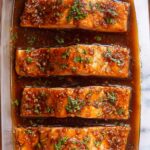
Oven-Baked Salmon with Honey Soy Glaze Recipe
- Prep Time: 10 minutes
- Cook Time: 20 minutes
- Total Time: 30 minutes
- Yield: 4 servings
- Category: Main Course
- Method: Baking
- Cuisine: American
- Diet: Low Fat
Description
This Best Ever Baked Salmon recipe features tender, flaky salmon fillets coated with a savory and slightly sweet glaze made from soy sauce, honey, Dijon mustard, olive oil, and garlic. It's an easy, healthy, and delicious way to prepare salmon in the oven, perfect for a quick weeknight dinner or a special meal.
Ingredients
Main Ingredients
- 4 salmon fillets, 6 ounces each, skin on
- 1 ½ tablespoons low sodium soy sauce
- 1 tablespoon olive oil
- 1 tablespoon honey
- 1 ½ teaspoons Dijon mustard
- 2 cloves garlic, minced
Instructions
- Bring Salmon to Room Temperature: Remove the salmon from the refrigerator and let it come to room temperature while you prepare the other ingredients. This ensures even cooking.
- Preheat Oven and Prepare Baking Dish: Preheat the oven to 400° F. Line a 9×13-inch baking dish with parchment paper or foil to make cleanup easier.
- Make the Glaze: In a small bowl, whisk together the low sodium soy sauce, olive oil, honey, Dijon mustard, and minced garlic until well combined.
- Arrange Salmon and Apply Glaze: Place the salmon fillets skin side down in the prepared baking dish. Reserve half of the glaze in a separate clean dish. Brush or spoon the remaining half of the glaze evenly over the salmon fillets.
- Bake the Salmon: Bake the salmon for 12 minutes. Then brush on the remaining reserved glaze. Continue baking for an additional 8 minutes or until the salmon flakes easily with a fork or reaches your preferred doneness. Thicker fillets may take longer to cook. The FDA recommends an internal temperature of 145° F, but some prefer it cooked to 125-130° F followed by resting for 3 minutes before serving.
Notes
- You can substitute the glaze with a dry rub using your favorite Salmon Seasoning before baking.
- Use parchment paper or foil to line the baking dish for easier cleanup.
- Allowing salmon to rest a few minutes after baking helps retain moisture and flavor.
- Adjust baking times depending on the thickness of the salmon fillets for optimal results.
Nutrition
- Serving Size: 1 fillet (6 ounces)
- Calories: 280 kcal
- Sugar: 4 g
- Sodium: 400 mg
- Fat: 14 g
- Saturated Fat: 2 g
- Unsaturated Fat: 10 g
- Trans Fat: 0 g
- Carbohydrates: 6 g
- Fiber: 0 g
- Protein: 30 g
- Cholesterol: 70 mg


Leave a Reply