
There’s something irresistibly cozy and savory about combining caramelized onions, mushrooms, and crispy pancetta all tossed with pasta. This French Onion Pasta with Mushrooms and Pancetta Recipe hits all the comfort food notes without demanding hours in the kitchen. Let me show you why it’s quickly become one of my all-time favorite weeknight dishes.

Jump to:
- Why You'll Love This Recipe
- Ingredients & Why They Work
- Make It Your Way
- Step-by-Step: How I Make French Onion Pasta with Mushrooms and Pancetta Recipe
- Top Tip
- How to Serve French Onion Pasta with Mushrooms and Pancetta Recipe
- Make Ahead and Storage
- Frequently Asked Questions:
- Final Thoughts
- French Onion Pasta with Mushrooms and Pancetta Recipe
Why You'll Love This Recipe
This dish marries rich French onion flavors with the hearty earthiness of mushrooms and the salty punch of pancetta. It’s a sophisticated twist on pasta that feels both indulgent and approachable—perfect for impressing yourself or guests.
- Flavor balance: The deep caramelized onions provide sweetness that complements the savory pancetta and umami-packed mushrooms beautifully.
- Textural contrast: Soft onions and melty cheese paired with tender pasta and crispy pancetta make every bite interesting.
- Comfort food with finesse: It’s cozy, creamy, and familiar—like French onion soup meets Italian pasta night.
- Flexible and customizable: You can tweak the mushrooms, cheese, or even swap pancetta for bacon or a vegetarian alternative.
Ingredients & Why They Work
Each ingredient plays a crucial role in crafting the richness and depth of this French Onion Pasta with Mushrooms and Pancetta Recipe. Knowing a little about them helps you shop smarter and cook with intention.

- Beef and chicken broth: The combo adds complex savory depth without overpowering the sauce. You can use all beef or all chicken broth if preferred.
- Half and half: Adds creamy richness that isn’t too heavy or overwhelming in flavor.
- Hot sauce: Just a splash here acts as a subtle flavor booster, balancing sweetness and savoriness without heat.
- Worcestershire and Dijon mustard: Both add layers of umami and gentle tang that enrich the sauce base.
- Dried herbs (parsley, thyme, oregano): These aromatics create a fragrant bouquet that brightens the dish.
- Olive oil: For sautéeing mushrooms—helps develop that golden sear and flavor.
- White button mushrooms: Mild in flavor, they soak up the sauce nicely. Cremini or baby portabellas make tasty swaps.
- Pancetta: Salty, fatty, and crispy—this ingredient adds a lovely crunch and saltiness. Bacon or ham work well too.
- Dry white wine: Adds acidity and brightness; Pinot Grigio or Sauvignon Blanc are great here. If you skip wine, broth works as a substitute.
- Butter: Essential for cooking onions and enriching the sauce.
- Yellow onions: Thinly sliced for even caramelization; the star ingredient for that signature French onion flavor.
- Garlic: Provides subtle savory warmth.
- Flour: Thickens the sauce to a lovely creamy texture.
- Gruyere and Parmesan cheese: Gruyere melts beautifully and adds nuttiness, while Parmesan offers sharp salty notes. Mozzarella can substitute Gruyere for a milder take.
- Orecchiette pasta: The little “ear” shape captures the sauce in every bite. Alternatives include penne, ziti, or shells.
Make It Your Way
I love experimenting with this recipe depending on what’s in my fridge. The great thing is, it’s a forgiving base that can easily be adjusted to suit your taste or dietary needs.
- Vegetarian variation: Skip pancetta and add a half bouillon cube to the sauce for extra depth. Mushrooms alone keep it hearty and satisfying.
- Cheese swap: I’ve used mozzarella when I’m out of Gruyere, and it still turns out creamy and delicious—just a bit milder.
- Mushroom upgrades: Mixing in cremini or shiitake mushrooms can add a more robust earthiness if you want to deepen flavors.
- Gluten-free twist: Use your favorite gluten-free pasta and a gluten-free flour replacement for thickening the sauce.
Step-by-Step: How I Make French Onion Pasta with Mushrooms and Pancetta Recipe

Step 1: Prep everything ahead of time
Before turning on the stove, I like to measure out all the sauce ingredients into one large liquid measuring cup. It makes adding them later a breeze. Also, slice those onions thinly and evenly—it really helps the caramelization cook consistently. Sharp knives are your friends here, trust me!
Step 2: Sauté mushrooms and pancetta
Heat olive oil over medium-high heat and toss in the mushrooms with a pinch of salt. Let them cook undisturbed for a couple of minutes so they get that beautiful sear, then stir and sauté another minute or two. Add the diced pancetta and cook until it crisps up slightly. Setting these aside lets you focus on the sauce without overcooking them.
Step 3: Build the base with wine and onions
Using the same skillet, turn off the heat briefly and pour in the white wine. Use a spatula to scrape any browned bits off the bottom — that’s pure flavor gold. Add butter and your onions next, stirring frequently. I start them on medium heat and bring it down to medium-low for a long, slow caramelization. It takes patience (about 45 minutes), but trust me, the depth of flavor is worth it.
Step 4: Add garlic, thicken the sauce
Once the onions are beautifully caramelized, stir in the minced garlic and cook for just one minute—don’t let it burn! Then sprinkle the flour in and keep stirring for a couple of minutes. This step thickens and rounds out the sauce beautifully.
Step 5: Incorporate the sauce liquids and simmer
Gradually add the sauce mixture you prepared at the start, pouring in small splashes while stirring constantly to avoid lumps. Bring it to a gentle boil, then lower the heat to a simmer, covering it partially. This simmers while you cook the pasta to al dente—don’t overcook your pasta; you want it firm enough to hold all that sauce.
Step 6: Finish with cheese, mushrooms, pancetta, and pasta
Lower the sauce heat to low and slowly add grated Gruyere and Parmesan, stirring continuously to melt them smoothly into the mixture. Toss in your sautéed mushrooms and pancetta. Finally, stir in the pasta little by little until the ratio of sauce to pasta feels just right to you—creamy but not overwhelmed.
Top Tip
From my many attempts making this French Onion Pasta with Mushrooms and Pancetta Recipe, a few small things make a huge difference in the final dish. These tips will save you time and elevate flavors without any extra fuss.
- Evenly sliced onions: This is the secret to perfectly caramelized onions; uneven slices cook at different rates and can leave you with burnt bits or raw chunks.
- Cheese melting technique: Add cheese over low heat and stir constantly to prevent grainy, separated sauce—patience pays off here.
- Scrape that fond: When adding wine, use a spatula to scrape the browned bits stuck to the pan—that’s where all your flavor lives.
- Reserve pasta water: Though usually not needed, a splash can rescue the sauce if it thickens too fast or gets clumpy.
How to Serve French Onion Pasta with Mushrooms and Pancetta Recipe

Garnishes
I always sprinkle a little extra freshly grated Parmesan on top and a few twists of cracked black pepper. Sometimes, I add finely chopped fresh parsley or thyme just to brighten it a bit. It’s these little touches that add freshness and make the dish look as good as it tastes.
Side Dishes
A crisp green salad with a lemon vinaigrette pairs perfectly with this rich pasta. I also love serving it alongside garlic bread or a simple roasted vegetable medley—think asparagus or Brussels sprouts—to balance out all that richness.
Creative Ways to Present
For special occasions, I like serving it in individual shallow bowls topped with an herb sprig for flair. Another favorite is layering it in a casserole dish and broiling it briefly with extra cheese until bubbly and golden—comfort food that feels fancy!
Make Ahead and Storage
Storing Leftovers
I store any leftovers in airtight containers in the fridge for up to three days. The flavors actually deepen overnight, making it even better the next day. Just give it a gentle stir before reheating.
Freezing
This dish freezes quite well for up to three months. I recommend freezing in individual portions, so you can thaw just what you need. Thaw overnight in the fridge before reheating for best results.
Reheating
Reheat gently on the stovetop over low heat, adding a splash of broth or water if it seems too thick. Microwave works too in a pinch—just cover and heat in short bursts to avoid drying out.
Frequently Asked Questions:
Absolutely! If you prefer to avoid wine, simply substitute with additional broth—either chicken or beef—for flavorful depth without the alcohol.
Great alternatives to orecchiette include penne, ziti, medium shells, cavatappi, farfalle, and rigatoni. Just pick a pasta that holds sauce well to get the best experience.
Expect the onions to take around 45 minutes to caramelize slowly and develop that sweet, deep flavor. Stir frequently and adjust the heat if they’re browning too fast.
Yes! You can substitute Gruyere with whole milk, low-moisture mozzarella for a milder cheesy flavor. Parmesan can also be swapped for other aged cheeses like Pecorino Romano, though it does change the flavor profile a bit.
Final Thoughts
I remember the first time I made this French Onion Pasta with Mushrooms and Pancetta Recipe—it was a chilly evening and I wanted something comforting but a little different. The slow-cooked onions and crispy pancetta were like a warm hug on a plate. I’m confident once you give it a try, it’ll become a staple in your rotation too. So go ahead, put on some music, and start caramelizing those onions—you won’t regret it!
Print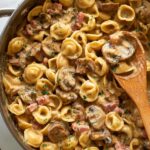
French Onion Pasta with Mushrooms and Pancetta Recipe
- Prep Time: 20 minutes
- Cook Time: 1 hour 10 minutes
- Total Time: 1 hour 30 minutes
- Yield: 6 servings
- Category: Main Course
- Method: Stovetop
- Cuisine: French-inspired
Description
French Onion Pasta is a rich and savory dish combining caramelized onions, mushrooms, pancetta, a creamy cheesy sauce, and orecchiette pasta. Inspired by classic French onion flavors, this recipe transforms the beloved soup into a comforting pasta dish with a delightful balance of umami and creaminess.
Ingredients
Sauce
- 1 cup beef broth
- ½ cup chicken broth
- 1 cup half and half
- 1 teaspoon hot sauce
- 1 teaspoon Worcestershire sauce
- 1 teaspoon Dijon mustard
- 1 teaspoon dried parsley
- ½ teaspoon dried thyme
- ½ teaspoon dried oregano
Pasta and Other Ingredients
- 1 tablespoon olive oil
- 8 oz white button mushrooms
- Salt, to taste
- Pepper, to taste
- 4 oz pancetta, diced
- ⅔ cup dry white wine (such as Pinot Grigio, Sauvignon Blanc, or Chardonnay)
- 3 tablespoons butter
- 3 medium yellow onions (about 15 oz), sliced into ¼-inch strings
- 4 cloves garlic, minced
- 3 tablespoons flour
- ½ cup Gruyere cheese, shredded (can substitute mozzarella cheese)
- ½ cup Parmesan cheese, freshly grated
- ¾ pound orecchiette pasta
Instructions
- Prepare Sauce Ingredients: Combine beef broth, chicken broth, half and half, hot sauce, Worcestershire sauce, Dijon mustard, dried parsley, thyme, and oregano in a large measuring cup with a spout. Set aside. Also, measure out the other ingredients to have everything ready.
- Sauté Mushrooms and Pancetta: Heat olive oil over medium-high heat in a large skillet. Add mushrooms and sauté for 3 minutes, seasoning with salt to enhance flavor. Add diced pancetta and cook for another 3 to 4 minutes until browned. Remove mushrooms and pancetta from the skillet and set aside.
- Deglaze Skillet: Turn heat off briefly, then pour white wine into the skillet. Turn heat back to medium and use a silicone spatula to scrape and loosen browned bits from the bottom and sides of the skillet to deepen flavor.
- Cook Onions: Add butter and sliced onions to the skillet. Cook on medium heat, stirring frequently for 10 minutes. Then reduce heat to medium-low and continue to cook, stirring frequently, until onions are deeply caramelized, about 35 more minutes. Adjust heat if onions cook too quickly and add extra olive oil or wine if needed for moisture.
- Boil Pasta: While onions are caramelizing, bring a large pot of water to a boil. Add ½ tablespoon kosher salt when boiling. Cook orecchiette pasta until al dente according to package instructions, then drain.
- Add Garlic and Flour: Stir minced garlic into the caramelized onions and cook for 1 minute. Add flour and cook for 2 minutes, stirring continuously to eliminate raw flour taste.
- Create Sauce Base: Gradually add the prepared sauce mixture in small splashes to the onion mixture, stirring constantly. Bring sauce to a gentle boil, then reduce heat and simmer partially covered while pasta cooks.
- Incorporate Cheese: Lower the heat to low and gradually stir in the Gruyere and Parmesan cheeses, mixing continuously until fully melted and combined to create a creamy sauce.
- Combine Mushrooms, Pancetta, and Pasta: Return the sautéed mushrooms and pancetta to the skillet, stirring them into the sauce. Add the cooked pasta gradually, mixing until the preferred sauce-to-pasta ratio is achieved.
- Serve: Once combined and heated through, serve the French Onion Pasta immediately for best flavor and texture.
Notes
- Use Pinot Grigio, Sauvignon Blanc, or Chardonnay for the white wine to enhance flavor; chicken or beef broth can substitute if you prefer not to use wine.
- Orecchiette pasta works great, but penne, ziti, medium shells, cavatappi, farfalle, or rigatoni are good alternatives.
- Shredding cheese from a block yields better melt and flavor than pre-shredded cheese; use whole milk, low moisture mozzarella for best results if substituting Gruyere.
- Add cheese over low heat to prevent dairy from separating and becoming grainy.
- White button mushrooms are ideal, but baby portabella or cremini mushrooms also work well.
- Slice onions uniformly for even caramelization.
- Hot sauce is used as a subtle flavor enhancer and does not make the dish spicy; Frank’s Hot Sauce is recommended.
- Pancetta can be swapped with bacon or finely diced ham; for a meatless version, consider adding ½ a bouillon cube to maintain savory depth.
- Combining chicken and beef broth adds flavor complexity, however all chicken or all beef broth can be used if preferred.
- Reserve pasta water to adjust sauce consistency if it becomes too thick or clumpy.
- Store leftovers in an airtight container refrigerated up to 3 days or freeze for up to 3 months.
Nutrition
- Serving Size: 1 serving
- Calories: 450 kcal
- Sugar: 6 g
- Sodium: 550 mg
- Fat: 20 g
- Saturated Fat: 9 g
- Unsaturated Fat: 9 g
- Trans Fat: 0 g
- Carbohydrates: 45 g
- Fiber: 4 g
- Protein: 18 g
- Cholesterol: 50 mg


Leave a Reply