
This might be the creamiest, most comforting dish you’ll whip up on a chilly evening. The Creamy Butternut Squash Pasta with Pancetta Recipe combines velvety roasted squash with crispy pancetta for a perfect balance of flavors and textures. Trust me, you’re gonna love it!

Jump to:
Why You'll Love This Recipe
I fell in love with this creamy butternut squash pasta early last fall. It’s that perfect combination of cozy and indulgent without feeling heavy or complicated. Plus, that crispy pancetta adds a salty crunch that just can’t be beat.
- Velvety Sauce: Roasting the butternut squash and garlic brings out a natural sweetness that makes the sauce rich and smooth.
- Simple Ingredients: You probably already have everything in your kitchen—no fancy groceries needed.
- Quick to Make: Once the veggies are roasting, the rest comes together quickly, perfect for weeknights or casual dinners.
- Customizable: Whether you swap pancetta for bacon or try a different pasta shape, this recipe is super versatile.
Ingredients & Why They Work
These ingredients collaborate to create an amazing flavor profile and texture contrast. The buttery sweetness from butternut squash pairs beautifully with salty pancetta, while the roasted garlic adds a mellow complexity to the creamy sauce.

- Garlic: Roasting garlic transforms its sharpness into a sweet, soft flavor that blends perfectly in the sauce.
- Butternut Squash: The star of the show—roasted until tender and caramelized for depth of flavor.
- Yellow Onion: Adds a mild sweetness and body to the sauce when caramelized alongside the squash.
- Olive Oil: For roasting and cooking pancetta, bringing richness without overpowering the dish.
- Pancetta: Crisps up to lend a savory, salty bite that contrasts wonderfully with the creamy sauce.
- Pasta: I prefer thick spaghetti or bucatini—those hollow centers hold the sauce beautifully.
- Whole Milk: Balances creaminess and tang, making the sauce silky without weighing it down.
- Chicken or Vegetable Broth: Adds umami and helps thin the sauce to just the right consistency.
- Italian Seasoning: Brings classic herbs that complement the squash’s sweetness.
- Ground Nutmeg: Optional, but just a pinch can add a subtle warmth to the flavor.
- Italian Parsley: Freshens the dish with a pop of color and herbaceous brightness.
- Parmesan Cheese: Your finishing touch—its salty depth rounds out the flavors perfectly.
Make It Your Way
While I adore the original recipe as is, I’ve often played around with it based on what’s in my fridge or who’s coming over. It’s really forgiving and invites creativity.
- Variation: I sometimes swap pancetta with crispy bacon or even prosciutto for a slightly different smoky note. If you’re vegetarian, crispy sautéed mushrooms or roasted chickpeas make a tasty alternative.
- Dairy Swap: If you want a lighter option, half-and-half works well too. Just avoid heavy cream—it makes the sauce too thick and rich.
- Pasta Choices: Don’t be afraid to try short pasta shapes like penne or fusilli—they catch the sauce beautifully and make for a fun twist.
- Herb Adjustments: Fresh sage or thyme can be fantastic if you’re feeling adventurous with seasoning.
Step-by-Step: How I Make Creamy Butternut Squash Pasta with Pancetta Recipe

Step 1: Roast the Veggies to Sweet Perfection
Start by preheating your oven to 425°F. Cutting the top off the garlic head and roasting it whole wrapped in foil with olive oil is a magic trick—it softens the cloves into buttery pearls you can squeeze right into the blender later. Toss the cubed butternut squash and chopped onion with olive oil, salt, and pepper on separate pans so they roast evenly. Toss parts way through roasting to get that even caramelization. The smell while roasting is pure kitchen therapy, seriously.
Step 2: Cook Pasta and Crisp Pancetta
While the veggies roast, get your pasta boiling in well-salted water and cook until just al dente. Save about a cup of that starchy pasta water before draining—it’s a little secret ingredient to adjust your sauce consistency later. Next, render your pancetta in a skillet until golden and delightfully crispy; this crispy texture brings the whole dish to life in every bite.
Step 3: Blend the Sauce and Combine
Pop the roasted butternut squash, onions, and squeezed garlic into a blender along with the milk and broth. Blend on high until smooth and creamy. Remember, you can add more milk if the sauce feels too thick—each squash batch can behave differently. Pour the sauce into a large pan, warm it gently, and adjust thickness with your reserved pasta water. Season with Italian seasoning, salt, pepper, and a pinch of nutmeg if you’re using it. Toss in the pasta until every strand is beautifully coated, then fold in the crispy pancetta. Serve immediately with freshly grated parmesan and a sprinkle of parsley for color.
Top Tip
I’ve made this dish dozens of times, and a few little tricks really boosted my game. Here are my favorite tips to make sure your Creamy Butternut Squash Pasta with Pancetta Recipe turns out perfectly every time.
- Don’t Skip Roasting the Garlic: It changes from sharp to sweet and creamy, which makes the sauce incredible.
- Reserve Pasta Water: That starchy water is gold. It helps your sauce cling to the pasta without getting gloopy.
- Pancetta Timing: Cook it while the veggies roast so it’s ready right when your sauce is done. Crispy pancetta brings the perfect texture contrast.
- Adjust the Sauce Consistency: Add liquid gradually, because butternut squashes vary in moisture—aim for coating pasta, not drowning it.
How to Serve Creamy Butternut Squash Pasta with Pancetta Recipe

Garnishes
I like to keep it simple with chopped Italian parsley for freshness and a generous grating of parmesan cheese. Sometimes I splash a little extra virgin olive oil on top for an added silkiness. If you’re daring, a few red pepper flakes bring a lovely warmth.
Side Dishes
This pasta holds up beautifully with a crisp green salad dressed simply with lemon and olive oil. Roasted Brussels sprouts or a garlicky kale sauté are my go-to veggie sides when I want a heartier meal.
Creative Ways to Present
For dinner parties, I like to serve this pasta in individual shallow bowls, topped with pancetta and parsley, and a small wedge of crusty bread on the side for scooping up every last bit of sauce. It’s a guaranteed crowd-pleaser and feels extra special without extra fuss.
Make Ahead and Storage
Storing Leftovers
I store leftovers in an airtight container in the fridge and have noticed the sauce thickens overnight. No worries, though—I just loosen it with a splash of milk when reheating. It reheats beautifully and tastes almost as good as fresh.
Freezing
I usually freeze just the sauce separately in portioned containers. The texture holds up well when thawed, and you can quickly boil fresh pasta when ready to eat. Avoid freezing the pasta mixed in—it can get mushy.
Reheating
Reheat gently on the stovetop over low heat, stirring and adding a bit of milk to loosen the sauce, or zap it in the microwave with a splash of milk, stirring halfway through. Taking these small steps keeps the sauce rich and creamy every time.
Frequently Asked Questions:
Absolutely! Swap pancetta for crispy chickpeas or mushrooms. Replace whole milk with unsweetened oat or almond milk, and use a plant-based parmesan alternative or nutritional yeast for that cheesy flavor.
I recommend thick spaghetti or bucatini because they hold the sauce well, but feel free to use penne, fusilli, or pappardelle depending on what you have or prefer — they all work great!
Definitely! You can roast the vegetables a day ahead and store them in the fridge, or make the creamy sauce in advance and just reheat when ready to serve. If you want to take it even further, you can assemble the entire dish and reheat gently, adding a splash of milk to loosen the sauce.
The best way is to reheat on the stovetop over low heat, stirring frequently and adding a little milk to loosen the sauce. You can also microwave it in short bursts, stirring in between, with a splash of milk. Avoid high heat to keep the pasta tender and sauce creamy.
Final Thoughts
This Creamy Butternut Squash Pasta with Pancetta Recipe is one of those dishes that feels like a warm hug on a plate. It’s comforting, flavorful, and surprisingly easy to pull together, even if you’re new to cooking with butternut squash. I hope when you make it, it brings a little extra joy and coziness to your table just like it does to mine. Give it a try—you won’t regret it!
Print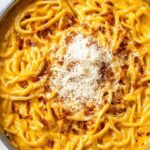
Delicious Recipe
- Prep Time: 45 minutes
- Cook Time: 15 minutes
- Total Time: 1 hour
- Yield: 4 servings
- Category: Main Course
- Method: Roasting
- Cuisine: Italian
- Diet: Low Lactose
Description
This creamy Butternut Squash Pasta features roasted butternut squash, caramelized onions, and roasted garlic blended into a luscious sauce, tossed with al dente pasta and crispy pancetta, finished with parmesan cheese and fresh parsley for a comforting and flavorful dish perfect for fall or any cozy dinner.
Ingredients
Main Ingredients
- 1 whole head garlic
- 1 medium butternut squash - peeled and cut into 1-inch cubes
- 1 large yellow onion - chopped
- Salt and pepper to taste
- Olive oil - for drizzling and roasting
- 1 pound thick spaghetti or bucatini pasta
- 1 cup pancetta, small-diced
- 2 ½ cups whole milk, plus more as needed
- 1 cup chicken or vegetable broth
- ¼ teaspoon dried Italian seasoning
- A pinch of ground nutmeg (optional)
- Chopped Italian parsley for garnish (optional)
- Grated parmesan cheese for serving
Instructions
- Roast the veggies: Preheat your oven to 425 degrees F. Cut ¼ inch off the top of the whole head of garlic, leaving it unpeeled. Place it on a sheet of aluminum foil, drizzle generously with olive oil, season with ½ teaspoon salt and pepper, then fold the foil tightly to seal. Toss the diced butternut squash with olive oil, salt, and pepper on a large sheet pan. On another sheet pan, do the same with the chopped onion and place the wrapped garlic alongside. Roast all for 35 minutes, stirring the squash and onions halfway through. Remove the onions a few minutes early if they caramelize faster.
- Cook pasta and pancetta: While roasting, cook the pasta in generously salted boiling water until al dente. Reserve 1 cup of the pasta cooking water, drain the pasta, and rinse briefly under cold water to stop cooking. In a skillet, cook the pancetta until golden and crispy. Set aside.
- Blend the sauce and toss with pasta: Transfer the roasted butternut squash and onions to a blender. Squeeze the roasted garlic cloves from their skins and add to the blender. Pour in the whole milk and broth, then blend on high until smooth and creamy, adding more milk if necessary to reach a sauce-like consistency. Pour the sauce into a large skillet or the pasta pot and warm over low heat. Adjust the sauce thickness by stirring in reserved pasta water or more milk as needed. Season with Italian seasoning, salt, pepper, and a pinch of nutmeg if using. Add the drained pasta to the sauce and toss to coat well.
- Serve: Plate the pasta and top with crispy pancetta, grated parmesan cheese, and a sprinkle of chopped Italian parsley if desired. Serve immediately.
Notes
- The amount of milk needed depends on the size of the butternut squash; adjust to your desired sauce consistency. Half-and-half can be substituted for richer sauce.
- Whole milk or half-and-half is recommended for optimal creaminess; avoid heavy cream as it makes the sauce too thick and skim milk as it thins it too much.
- A pinch of ground nutmeg adds warm, cozy flavor but can be skipped if preferred.
- You can make this dish ahead by roasting the veggies, preparing just the sauce, or cooking everything and reheating later.
- Reheat gently on the stovetop or microwave, adding a splash of milk to loosen the sauce as it may thicken overnight.
- Substitutions: Use 2% milk or half-and-half instead of whole milk; any short or long pasta works well; substitute crispy prosciutto or bacon for pancetta; pecorino romano can replace parmesan cheese.
Nutrition
- Serving Size: 1 serving
- Calories: 520 kcal
- Sugar: 6 g
- Sodium: 550 mg
- Fat: 22 g
- Saturated Fat: 7 g
- Unsaturated Fat: 14 g
- Trans Fat: 0 g
- Carbohydrates: 58 g
- Fiber: 6 g
- Protein: 20 g
- Cholesterol: 45 mg


Leave a Reply